Thirty Days to Halloween, Day 24: Under the Witch’s Mark
Thirty Days to Halloween, Day 24: Under the Witch’s Mark
Thirty Days to Halloween, Day 23: Why We Crave Horror Movies by Stephen King
I think that we’re all mentally ill; those of us outside the asylums only hide it a little better -and 1 maybe not all that much better, after all. We’ve all known people who talk to themselves, people who sometimes squinch their faces into horrible grimaces when they believe no one is watching, people who have some hysterical fear- of snakes, the dark, the tight place, the long drop…and, of course, those final worms and grubs that are waiting so patiently underground.
When we pay our four or five bucks and seat ourselves at tenth-row center in a theater showing a horror movie, we are daring the nightmare.
Why? Some of the reasons are simple and obvious. To show that we can, that we are not afraid, that we can ride this roller coaster. Which is not to say that a really good horror movie may not surprise a scream out of us at some point, the way we may scream when the roller coaster twists through a complete 360 or plows through a lake at the bottom of the drop. And horror movies, like roller coasters, have always been the special province of the young; by the time one turns 40 or 50, one’s appetite for double twists or 360-degree loops may be considerably depleted.
We also go to re-establish our feelings of essential normality; the horror movie is innately conservative, even reactionary. Freda Jackson as the horrible melting woman in Die, Monster, Die! confirms for us that no matter how far we may be removed from the beauty of a Robert Redford or a Diana Ross, we are still light-years from true ugliness.
And we go to have fun. Ah, but this is where the ground starts to slope away, isn’t it? Because this is a very peculiar sort of fun, indeed. The fun comes from seeing others menaced-sometimes killed. One critic has suggested that if pro football has become the voyeur’s version of combat, then the horror film has become the modern version of the public lynching.
It is true that the mythic, “fairy-tale” horror film intends to take away the shades of gray…. It urges us to put away our more civilized and adult penchant for analysis and to become children again, seeing things in pure blacks and whites. It may be that horror movies provide psychic relief on this level because this invitation to lapse into simplicity, irrationality and even outright madness is extended so rarely. We are told we may allow our emotions a free rein…or no rein at all.
If we are all insane, then sanity becomes a matter of degree. If your insanity leads you to carve up 8 women like Jack the Ripper or The Cleveland Torso Murderer, we clap you away in the funny farm (but neither of those two amateur-night surgeons was ever caught heh-heh-heh); if, on the other hand, your insanity leads you only to talk to yourself when you’re under stress or to pick your nose on your morning bus, tben you are left alone to go about your business…though it is doubtful that you will ever be invited to the best parties.
The potential lyncher is in almost all of us (excluding saints, past and present; but then, most saints have been crazy in their, own ways), and every now and then, he has to be let loose to scream and roll around in the grass. Our emotions and our fears form their own body, and we recognize that it demands its own exercise to maintain proper muscle tone. Certain of these emotional muscles are accepted -even exalted- in civilized society; they are, of course, the emotions that tend to maintain the status quo of civilization itself. Love, friendship, loyalty, kindness-these are all the emotions that we applaud, emotions that have been immortalized in the couplets of Hallmark cards and in the verses (I don’t dare call it poetry) of Leonard Nimoy.
When we exhibit these emotions, society showers us with positive reinforcement; we learn this even before we get out of diapers. When, as children, we hug our rotten little puke of a sister and give her a kiss, all the aunts and uncles smile and twit and cry, “Isn’t he the sweetest little thing?” Such coveted treats as chocolate-covered graham crackers often follow. But if we deliberately slam the rotten little puke of a sister’s fingers in the door, sanctions follow-angry remonstrance from parents, aunts and uncles; instead of a chocolate-covered graham cracker, a spanking.
But anticivilization emotions don’t go away, and they demand periodic exercise. We have such “sick” 11 jokes as “What’s the difference between a truckload of bowling balls and a truckload of dead babies? (You can’t unload a truckload of bowling balls with a pitchfork…a joke, by the way, that I heard originally from a ten-year-old). Such a joke may surprise a laugh or a grin out of us even as we recoil, a possibility that confirms the thesis: If we share a brotherhood of man, then we also share an insanity of man. None of which is intended as a defense of either the sick joke or insanity but merely as an explanation of why the best horror films, like the best fairy tales, manage to be reactionary, anarchistic, and revolutionary all at the same time.
The mythic horror movie, like the sick joke, has a dirty job to do. It deliberately appeals to all that is worst in us. It is morbidity unchained, our most base instincts let free, our nastiest fantasies realized …and it all happens, fittingly enough, in the dark. For those reasons, good liberals often shy away from horror films. For myself, I like to see the most aggressive of them -Dawn of the Dead, for instance -as lifting a trap door in the civilized forebrain and throwing a basket of raw meat to the hungry alligators swimming around in that subterranean river beneath.
Why bother? Because it keeps them from getting out, man. It keeps them down there and me up here. It was Lennon and McCartney who said that all you need is love, and I would agree with that.
As long as you keep the gators fed.
Thirty Days to Halloween, Day 22: “The Raven” by Poe
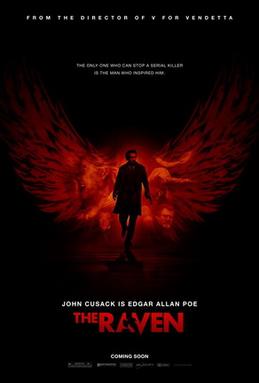
What would Halloween be without “The Raven” by Edgar Allan Poe? Readings and discussions of this American classic have almost become a Halloween tradition. This post focuses on the poem in an episode of the Simpsons and a movie based on the last days of Poe. I’m anxious to hear your thoughts!
The other day, I viewed The Raven, a 2012 American psychological crime thriller film. According to Wikipedia, Set in 1849,[2] it is a “fictionalized account of the last days of Edgar Allan Poe‘s life, in which the poet and author pursues a serial killer whose murders mirror those in Poe’s stories.” I enjoyed the film greatly, as I do any film that is focused on literature and authors. Here’s a short trailer of this film:
! 
Thirty Days to Halloween, Day 21: The Wolfman, the Rougarou.
One of my favorite childhood memories was watching horror movies on our little black and white TV. I especially enjoyed and remember The 1941 version of The Wolfman, starring, Lon Chaney. That film changed the way I viewed the night, the moon, and firmly planted in my head the power of legends. Chaney actually starred in seven films as the wolfman. HERE is an interesting site with trivia from that first wolfman movie. And here is a short video featuring Lon Chaney:
The belief in werewolves dates back to ancient times. The Online Etymology Dictionary says that in the ancient Persian calendar, the eighth month (October-November) was Varkazana-, literally “(Month of the) Wolf-Men.”The term werewolf comes from the Old English (Anglo-Saxon) and means “man wolf.” Lycanthropy is a word that describes a form of madness describing people who believe they are wolves or who actually transform themselves into wolves. Since the Chaney movie, hundreds of werewolf movies have been made, many of them featuring notable actors, the image an idea of a man becoming a wolf never failing to fascinate and terrify. My personal favorite are the savage Lycan werewolves in Underworld, who are in constant war with vampires. Here is a short video about the rise of the Lycan:
https://www.youtube.com/watch?v=rnqHbqgPpZc
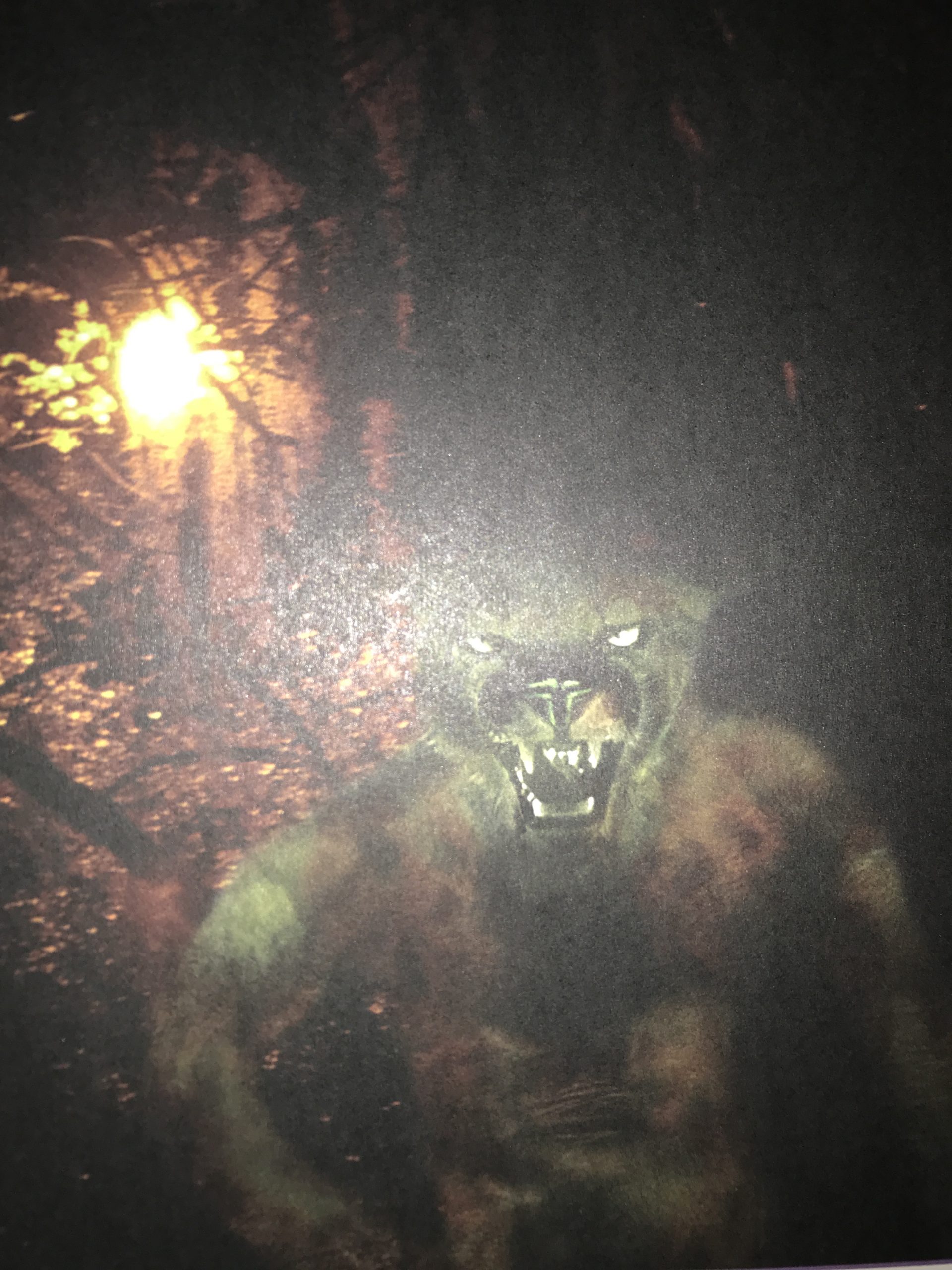
Louisiana has its own version of the werewolf called, the Rougarou or Loup-garou, which comes from the old French and means a sorcerer or an outcast of society who can change into a wolf. It’s said that you must whisper if you talk about them or they will overhear and come looking for you. According to the book, Weird Louisiana, they are said to feed on corpses of unblessed sinners and to howl and keep a distance from anyone who sings “Hallelujah.” Extremely popular in Louisiana folklore, there is an annual Rougarou Fest in Houma Louisiana in October. Here is a short newscast video about the Rougarou:
Here’s a Rougarou painting I liked from Weird Louisiana.
Thirty Days to Halloween, Day 20: Samhain & the Celts
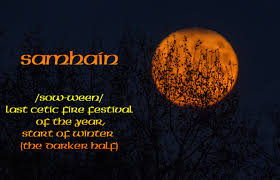
(Image is from Irishtraditions.com)
The ancient Celts had four Fire Festivals, and Samhain is thought by many to be their most significant celebration, held Oct. 31-Nov. 1. The Druidic festival divided the summer from the winter seasons. The Celts believed the veil and line between this world and the Otherworld, between the living and the dead was the thinnest and this thin line allowed souls and spirits to pass through into our world. Reckless travelers could meet any of these spirits at night, and that encounter could be either be pleasant or horrifying. You can read a great article on Samhain and the Celts and its celebration in Ireland HERE.
Little Annie, of Mary King’s Close (a ghostly poem by Rickey Pittman)
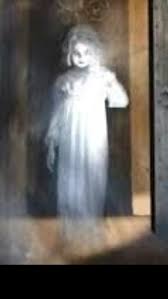
In Old Town Edinburgh,
Beneath the Royal Mile,
I walked through Mary King’s Close,
To explore it for a while.
Once lined with houses,
Eight stories high.
Sealed off in days of plague,
The residents left to die.
Once a haunt of criminals,
Now a haunt of ghosts,
Grave robbers like Burke and Ware,
These were feared the most.
I heard footsteps behind me,
And the rustle of a dress,
A lady in black darted by
Fading in the darkness,
We came to where wee Annie lived,
I’ve never seen a sadder room,
Visitors had left dolls and toys,
To brighten Annie’s gloom.
Her family left her there to die,
When the plague touched her face,
She waited for death in the dark alone,
In that room’s tiny space.
As I walked on, I felt a chill,
And a tug on my coat,
A little hand slipped into mine,
I felt a lump in my throat.
She whispered, “Annie’s my name,
Please don’t leave me alone,
The little hand slipped from mine,
And I finished the tour alone.
I don’t know if I’ll ever return,
But I know I’ll never forget,
The day a little ghost held my hand,
The memory haunts me yet.
Thirty Days to Halloween, Day 18: Japanese Horror
 In Japanese literature, anime, manga, theatre, and film, video games, and artwork, one can discover how popular horror is in Japanese culture. Japanese classics of horror date back several centuries. In these tales, which the Japanese call Kaidan (strange stories), one can find ghost stories, giant monsters, demons, possessions, vengeful spirits, zombies, psychological horror, Shinto gods who morph into vengeful states, and women. (There is an interesting website entitled, Femme Fatale: The Women of Japanese Horror.) And HERE, you can read a Beginner’s Guide to Japanese Horror.l For more extensive study, I would recommend the Encyclopedia of Japanese Horror.
America was introduced to Japanese horror in films like The Ring, The Grudge, Dark Water, and One Missed Call. The Forest is an American horror film that is set in Japan. On Facebook, one can find pages and groups devoted to Japanese horror and horror films.
Here’s a great little video about Japanese Horror. also known as J-Horror. This contains some history.
Here’s a video where Executive Producer of Crow’s Blood, Darren Lynn Bousman, tells us his Top 5 films from Japanese Horror.
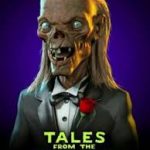
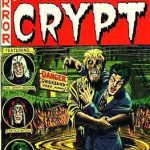
Hopefully, you will remember the demented, cackling laughter of the Cryptkeeper as he introduced HBO’s Tales of the Crypt that ran for seven seasons and 93 episodes from 1989 until 1996. The series was very successful and featured numerous award-winning actors and actresses in each self-contained episode that the Cryptkeeper introduced with puns, costumes, and questions for the audience. Cartoons, comics, movies and radio programs were created and influenced by the series. The original concept began with William Gaines comic series, Tales of the Crypt in 1950. The comics and film productions utilized an impressive team of writers and artists. You can see a website devoted to Tales of the Crypt HERE:
Here’s a short video of the opening of an episode.
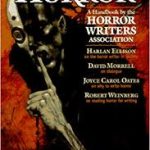
Writing Horror: A Handbook by the Horror Writers Association was edited by Mort Castle. (I’ve always liked the name, Mort or Mortimer. It means executioner!) For my readers who want to write horror fiction (and creative nonfiction), this book will prove very useful because of its practical and inspirational instruction. As the back cover blurb says, “Here you have it all: guidance on ideas, research and work-related reading; advice fr creating the elements of story; and analysis of the roles of passion, sex, and madness in powerful horror fiction.”
This book and the resources it provides will help you understand the appeal of writing and reading horror and how we can find our story ideas “in the mirror.” There’s an interview with Stephen King, there are insights into the concepts of horror, the new innovations of horror, and how to market horror writing. There’s also a fine reading on how to write horror for children, with do’s and don’ts.
There’s many good YouTube videos on writing horror, but I thought I’d share this one:
Thirty Days to Halloween, Day 15: The Grand Guignol Theatre of Fear and Horror
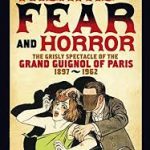
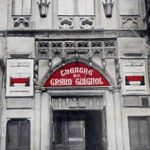
This type of theatre began in Paris and ran from 1897 and lasted until 1962. Began by the audacious Oscar Mentenier, who bought the smallest theatre in Paris (only 293 seats) to begin his work. The theatre was turned into a house of horror, crossing all boundaries without restraint. Productions were full of gore, torture, death, perversion, and psychological terror. Mentenier and the directors who followed him measured the success of their plays by how many people in the traumatized audience fainted or vomited during the performance. These productions were often censored.
Grand Guignol was the inspiration behind Anne Rice’s Théâtre des Vampires in her Interview with a Vampire. You can see the complete and very interesting history of Grand Guignol theatre, attempts to revive it, and its influence on, stage, movies, and literature HERE and HERE:
Here is an excellent introductory video to Grand Guignol Theatre: