Memorial Day

Today, I’m performing for a memorial service for seven lads from this area. It’s sponsored by the local chapter of the Blue Star MOthers. I’ve selected and practiced my songs, and I hope I can perform them without breaking down in emotion. One song especially touched me, “The Last Day of May,” written by Michael Troy. Here are the lyrics:

The Last Day of May by Michael Troy

On the hillside of tears
Stones stand like soldiers
All at attention, all in a row
Frozen in time, youthful in pictures
Too brave to stay, too young to go

Here’s to the boys,
Who all went before me
No honor or glory, could ever repay
The lives that you spent
Just tears in showers,
and hands full of flowers
On the last day in May.

Chorus

Though the valley of death,
did swallow them whole
God let no soul, die in vain
When the boundaries of peace,
get out of control
Let the Angel of Mercy, hold close their names.

There’s a house, with a wall
With all of the pictures, of all of the children
All of them grown
There’s a woman in the house
Who raised all the children
Who could never sleep easy, till all where at home

Here’s to the mothers,
who paid the ultimate price
Made to live out their lives, in grief all the years
Here’s to the fathers, who comfort their wife
With nothing to offer, but buckets of tears
Chorus
In fields of green pastures
They lie by still water
All at attention, all in a row
Though flesh turns to dust, souls are forever
They restored the order, our cups overflow

Chorus
You can see and hear my friend Jed Marum (from whom I learned the song) perform this moving song here:

Book & Program News

After the memorial service, I’ll be traveling to spend the night with my parents and tomorrow, I’ll present programs at Bells, TX ISD, then a book signing at Books-A-Million in Sherman, TX. Wednesday is up in the air (probably spent with my parents and spent writing) and Thursday I’ll be the speaker for a luncheon of the Caddo Parish librarians. Then perhaps I’ll be at Rosemont, the first Mississippi home of Jefferson Davis!  Busy week ahead!

What You Might See in the Woods in Louisiana

I’ve always loved the woods and forests. I’ve always thought that I was an anachronism, an alien to the age I was born in, belonging to another time and place in history. So I joined the Boy Scouts, was an Eagle Scout, was awarded the Bronze Palm, Order of the Arrow, 50 miler Award, and the God and Country Medal. I had a leaf collection, read everything I could on camping, hunting, and nature. I spent much time in the woods in my childhood, and after I learned to hunt, spent more. I’ve camped and hiked the woods of Colorado, Pennsylvania, Louisiana, Arkansas, and Texas.

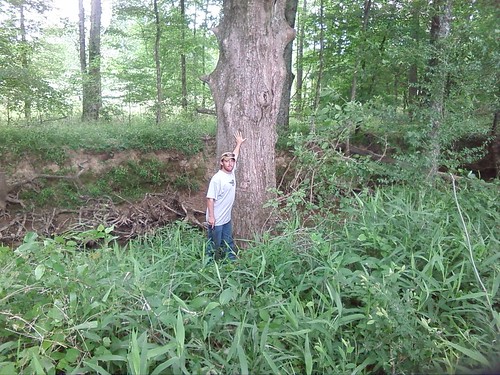
My son, Zachary, is a surveyor. He’s an good hunter and loves the outdoors–probably more than I do. His occupation keeps him in the woods of Northeast Louisiana constantly. He fights and dislikes the heat, ticks, chiggers, snakes, briars, mosquitoes, difficult land owners, and the other occupational hazards surveyors must face, but every now and then he comes on some sites of real beauty. Here’s a couple of photos that illustrate the things hidden in our woods. The first photo is of Zachary, standing next to a giant cedar. We’ve shown the picture to several and no one has ever seen a cedar this large. Yes, folks, the loggers missed this one!

tree

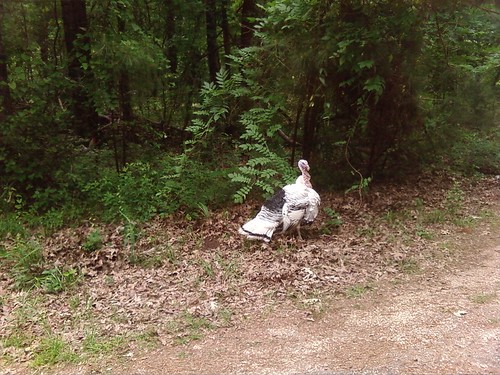
The second photo is of a beautiful wild turkey. Tom, is it really you, lad?

turkey

Do yourself a favor and enjoy the wilderness every chance you can. There’s no telling what you might see.

Saturday Thoughts

One of the Civil War reenactors I met at Jefferson, Texas wrote me and shared the link to his SCV camp’s site. (Sons of Confederate Veterans. ) It is one of the best sites I’ve seen for explaining what the Sons of Confederate Veterans organization is. The camp is in Orange, Texas. I hope to make it down to see these men sometime in the future. You can that site here:

And you can read about the Battle for Port Jefferson and see some photos here:

Book News:

As I’ve traveled and presented my programs in Texas schools, I’ve been impressed with how the students say the pledge to the Texas flag every day. If you’ve never read it, here it is:

Pledge to the Texas Flag

(Stand erect, remove your hat, place your right hand over your heart)
“Honor the Texas flag; I pledge allegiance
to thee, Texas, one state under God,
one and indivisible.”

And if you’ve never read the salute to the Confederate Flag, here it is:

Salute to the Confederate Flag

(Stand erect, remove your hat and stretch out your right hand, palm up)
“I salute the Confederate Flag with affection, reverence and undying devotion
to the Cause for which it stands.”

The Ten Causes of the War Between the States

Today, I found an article, posted on several sites on the Web, that argues there were ten main causes of the War Between the States. I’ve listed the author’s main points below. If you are interested in the “true” history of the War, rather than the version we have been taught in the past, you should read this article, written by James W. King and Lt. Col Thomas M. Nelson. You can find that site with the complete article here:

1. TARIFF: (Unfair Tariffs on the Southern States)

2. CENTRALIZATION VERSUS STATES RIGHTS (Though I will not add my own comments on all of the writer’s points, I do want to add this thought to this point: Do the people of America want Big (Brother) Government or a Limited Federal Government. Hurricanes Katrina and Rita revealed that the Federal Government is not the savior people had imagined.)

3. CHRISTIANITY VERSUS SECULAR HUMANISM

4. CULTURAL DIFFERENCES

5. CONTROL OF WESTERN TERRITORIES

6. NORTHERN INDUSTRIALISTS WANTED THE SOUTH’S RESOURCES

7. SLANDER OF THE SOUTH BY NORTHERN NEWSPAPERS

8. NEW ENGLANDERS ATTEMPTED TO INSTIGATE MASSIVE SLAVE REBELLIONS IN THE SOUTH

9. SLAVERY

10. NORTHERN AGGRESSION AGAINST SOUTHERN STATES

Since I am an English teacher and have often taught Charles Dickens, I found this quotation to be one of the best in the article.

Charles Dickens and the Causes of the Civil War

The famous English author Charles Dickens stated “[T]he Northern onslaught upon Southern slavery is a specious piece of humbug designed to mask their desire for the economic control of the Southern states.”

Burning Angel by James Lee Burke: A Short Review

Via audio CD, I just finished Burning Angel by James Lee Burke. This Dave Robicheaux novel was just as intriguing as all the others.  I love South Louisiana, its people, culture, food, and history and every read of this series teaches me and makes me love it more. Burke is a master of the first person narrative. Each novel contains just enough back story to make each volume self-contained, so that reading them in order is not imperative.  I believe Burke has created a detailed persona equal in complexity to the Sherlock Holmes detective that Doyle created.  It is obvious that Burke loves and studies words, dialogue, history, culture, and  that he knows human nature. There were several lines that affected me, but the best one today was “Sometimes it’s following the rules that kills you.” (That may be a paraphrase. I’ll check it for accuracy when I obtain a printed copy.)

I have read all of the Robicheaux novels except for A Morning for Flamingos and The Neon Rain. I own most of them, and the ones I don’t own, I intend to obtain.
Here is a summary of the novel, which I lifted from Burke’s website:

When Sonny Boy Marsallus returns to New Iberia after fleeing for Central America to avoid the wrath of the powerful Giacana family, his old troubles soon follow. Meanwhile Dave Robicheaux becomes entangled in the affairs of the Fontenot family, descendants of sharecroppers whose matriarch helped raise Dave as a child. They are in danger of losing the land they’ve lived on for more than a century.

As Dave tries to discover who wants the land so badly, he finds himself in increasing peril from a lethal, rag tag alliance of local mobsters and a hired assassin with a shady past. And when a seemingly innocent woman is brutally murdered, all roads intersect, and Sonny Boy is in the middle.

With the usual James Lee Burke combination of brilliant action and unforgettable characters, Burning Angel is the author at his best – showing that old hatreds and new ones are not that far apart.
Book and Program News:

I just returned from another week’s touring. The students at the Brownsboro and Bullard schools were endearing and so interested in my programs about the Civil War. My signing at the Books-A-Million in Longview went well, as did my Americana performance  at Auntie Skinner’s in Jefferson, Texas.  I’ll post photos as I get them.  Here is a photo of me at the Fort Worth Fort Trails Muster on May 10:

fort worth

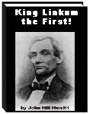
King Linkum, The First! by John Hill Hewitt

I’ve arranged for a reprint with Booklocker of a Civil War play, entitled, King Linkum, The First! by John Hill Hewitt. I’ve added some editorial notes in the introduction, but the rest is all Hewitt’s work. The pdf ebook is $7.95 and available here:

Linkum cover

INTRODUCTION:

John Hill Hewitt (1801-1890) is known as the “Bard of the Confederacy.” A prolific and skilled writer, poet, publisher, playwright, actor, theatre manager, composer, musician, essayist, and entrepreneur, this devoted Southerner left those who love the South a rich legacy. Long before I knew of Hewitt, I was acquainted with two of his most famous songs: “All Quiet Along the Potamac Tonight” and “Somebody’s Darling.”

King Linkum, the First! is one of Hewitt’s wartime plays. This play is a vicious satire of Lincoln, his cabinet, and his generals. The play depicts Lincoln as a warmonger, a power-hungry leader, who, as history reveals, had an “inborn talent in the Machiavellian arrangement of power. However, the play evaluates Lincoln personally as well as politically. The text mercilessly portrays Lincoln as a “henpecked husband.” These depictions may come as a shock to any who do not know the truth concerning the real Lincoln and are aware only of the sanitized, saintly Lincoln created by the politically correct illusionists of our present century. This is the play to read if one wants to know what Southerners truly thought and said about Lincoln during the war.

Hewitt composed the play in 1863. The play is an illustration of how theatre (especially in Charleston, Richmond, and Augusta) served as a source of entertainment for Southerners during the tumult and trauma of war. The play also vents popular Southern opinion regarding Lincoln, and to some degree the text reflects an optimism that most Southerners still held in 1863.

In the typing and reproduction of the text, certain format changes had to be made to conform to modern printing practice; however, the editor made every effort to retain the original play form as he found it and as Hewitt first produced it.

Rickey E. Pittman
Deo Vindici

There Will Be Blood: A short review

Last night, I watched There Will Be Blood, starring Daniel Day Lewis. As you may know, Lewis was an Academy Award winner for Best Actor and Rober Elswit, ASC for Best Cinematography. The movie is based (or perhaps inspired by) Upton Sinclair’s novel, Oil! Sinclair is most famous for his novel, The Jungle, one that I’ve taught in school. Sinclair is a great author to use to introduce students to the Muckrakers and to literature that can change society and how that is accomplished. With the news constantly reminding us of rising oil and gasoline prices and the high profits of oil companies, this movie may be more relevant than we may think. Sinclair saw something in the oil business, some demon that drove and controlled men. Though the oil business setting has changed somewhat and much of it shifted to the Middle East, there are still some obvious parallels that could be made and themes that could be formed.

I found Lewis to be an extraordinary actor in this film, but the physical action was slow. Much conflict was internal, and the complex conflict between people was brooding and full of intensity. The conflict was not between man and nature, so it was not a green film, though I thought the film had a naturalistic feel to it.

BOOK SIGNING AND TRAVEL NEWS:

Tonight, I’ll be leaving Monroe for my lodging in Tyler, Texas. Tomorrow, I’ll be at Bullard Intermediate at Bullard, Texas. Tomorrow night, I’ll be signing books at the BAM in Longview. Thursday, I’ll be in Brownsboro, TX again, then in Chandler in the afternoon. Thursday night, I’ll be performing at Auntie Skinner’s in Jefferson, TX 6:00-9:00 p.m.

Northeast Louisiana Celtic Society:

The Web page for the Northeast Louisiana Celtic Society is up and has a great look! Visit it and learn a little bit about us. I’m the program director.  Here is the link:

Bellmead, Texas

In yesterday’s post I spoke of Bellmead, Texas and the Civil War reenactment there. You can see tons of pictures here:

The Battle for Bellmead, 2008

This event was definitely up in the top of the list of Civil War reenactments I’ve ever attended. I have never seen a city treat Civil War reenactors so well. They provided us with food, firewood, crates of cold bottled water (and it was very hot!), and many other amenities. I made many new friends, met several school teachers interested in my programs, and stayed up late Friday and Saturday, talking and playing my guitar. I spoke Saturday morning for the Ladies Tea and was so impressed with the beautiful women there. They had such a love for history and for writing. It was heart warming to see whole families there, dressed in period clothes, reliving history. Even the games the kids played were all historically accurate games. The weather was perfect for an event, though the days did get a little warm, especially in combat with those wool jackets.

Unfortunately, this is the last year for the event, as much of the property we were on is being sold by the city of Bellmead. I camped with the 12th (their link is here) and 13th Texas Cavalry (their website is here). We fought as dismounted cavalry. I’ll post the link where you can see photos from the event very soon.
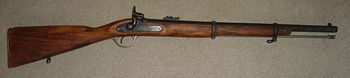
In the hour long battles on Saturday and Sunday, I learned that my long-barreled 3-Band Enfield is hard to load if you’re kneeling, which I learned that skirmishers did often. So, since I plan on doing more of these dismounted cavalry scenarios, I’ll have to buy a musketoon or carbine. A musketoon is a rifle with a short barrel, often used by naval forces (including pirates) and by cavalry because they could be loaded easier on horseback. Here is a photo of one from Wickipedia:

musketoon

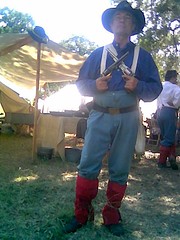
Another unique point about Bellmead: Usually, I’m with the Secessionist soldiers (Confederates) but for both Saturday and Sunday I was in my blue uniform, portraying the 2nd Texas and 5th Kansas respectively. (My grandfather Keel is probably turning over in his grave) In the photo below, I am dressed as a Redleg and holding two very fine black powder Colt revolvers. You can read a great encyclopedia article about the Redlegs here: The distinctive red leggings they wore are of leather. I first heard about them in the movie, Josey Wales. They were a brutal, tough group of men, totally devoted to the Union. Some say, a secret society.

redleg

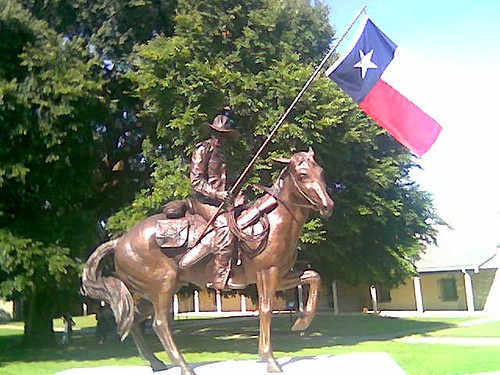
After the event closed down, I packed up and visited the Texas Ranger museum in Waco. This place has been on my “must see” list for many years. You can find the museum’s website here: At last, another goal accomplished. I watched the museum’s 45 minute video about the history of the Rangers, then toured the museum. So many great artifacts. The museum has a gift shop, but they were surprisingly slim on books. I did purchase a lithograph of Quanah Parker that I plan on using in my Texas History program I plan to do next fall. Here is a photo I took of a bronze statue of a mounted ranger in front of the museum.

ranger

Book Signing and Music Program News:

I have busy days ahead. Check my calendar on my website for complete details.

Texas During Reconstruction

Texas During Reconstruction

There are few good things to be said of the North’s Reconstruction of the South. To illustrate the distress and victimization of the South after the War, I chose a quotation of Robert E. Lee. He had surrendered his army in hope of healing and peace for the South. Instead, the South received the punitive and wicked policies of Reconstruction. In August of 1870, Mr. Lee said to Governor Stockdale of Texas:

“Governor, if I had foreseen the use those people designed to make of their victory, there would have been no surrender at Appomattox Courthouse; no sir, not by me. Had I foreseen these results of subjugation, I would have preferred to die at Appomattox with my brave men, my sword in this right hand.”

Reconstruction was time of political and economic turmoil. It was also during Reconstruction that much of the violence that characterized our view of the West developed, even in our section of the State. Much research is available in which one can find many interesting outlaw vignettes.

For example, according to this site, “The Corners,” a was wild ticket located where four counties meet–Fannin, Grayson, Collin, and Hunt—[and it] became the hideout for desperados of many persuasions. The principal fugitives were ex-Confederates who claimed to have been driven to a life outside the law by the unfairness of military rule. The gang leader was Bob Lee, a Captain in Forrest’s Raiders.”
The outlaws also gathered in “Wildcat Thicket: The strip of land in Fannin and Hunt lying just east of ‘The corners,’ a solid mass of undergrowth–trees, briar brushes, thorn vines, and grass. Wildcat Thicket had served as a bandit refuge during the War. Its inhabitants included army deserts and draft evaders of both North and South.
“Bob Lee built his hideout of timber and black oilcloth in the densest part of the Wildcat Thicket. It was closer to the ground than a regular army tent, making it necessary for Bob and his followers to crawl into the shelter.”

For a thorough and balanced look at Reconstruction in Texas, read this article, “The World Turned Upside Down: Reconstruction in Texas” on this website:

For Women Writers:

I stumbled on a great site devoted to helping women writers. It’s called Women’s Writer Block.net There is a wonderful summary of Western TV movies with a section called, “Our Favorite Westerns.” Here you will find the history and details of many series. I found it by searching for information on the old series, Johnny Yuma, the Rebel (Nick Adams starred in the series). The site also has great tips on writing. The site says about itself: “The Women Writers Block is a place for women to post their writing — fanfic, poems, and non-fiction stories . . . No password, library card, shirts or shoes required.”

You can read more about Women’s Writer’s Block here:

Today, I’ll be in Ruston, LA, performing Irish and Scottish songs, then on to Bellmead. (See yesterday’s blog).

Prairie Vista Middle School Visit

This past April 23-24, I presented my Scottish and my Civil War programs at Prairie Vista Middle School that’s part of Eagle Mountain-Saginaw ISD. Tanya Plocica is the library media specialist there and she is doing an outstanding job. She said my program was a hit with the students and that they are still talking about it. You can see more of the school here:

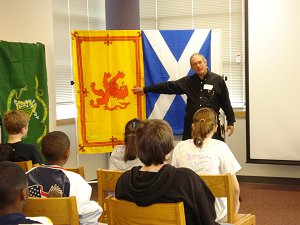
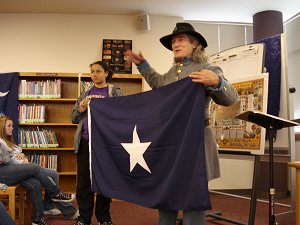
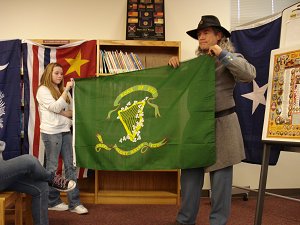
Here are three photos of my two days at the middle school, posted on the school’s website. I’m surprised at how interested the kids are in “flags” and how flags can be effective teaching tools. The first photo is of me in a kilt, teaching the students the difference between the Royal Flag of Scotland and the National Flag.

scottish flags

Here, I’m teaching them about the Bonnie Blue flag and my beloved Sons of Erin flag of the 10th Tennessee.

Bonnie Blue

10th Tennessee

By this next fall, I’ll have a Texas History program, and the flags of Texas will be a major part of that program as well, along with a show and tell table of objects and artifacts and of course, music.

PROGRAM NEWS 

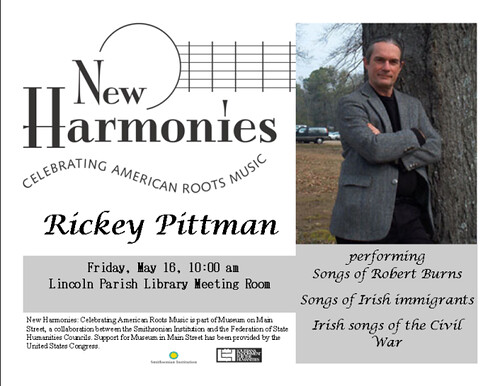
Tomorrow, I’ll be presenting my Scots-Irish program at the Lincoln Parish Library. Vivian McCain is the director there. Below is the library’s advertisement of the event. Here is the libraries site:

ad

From that event, I’ll drive on to Bellmead, Texas. You can read about the “Battle for Lake Bellmead” here:

I’ll be the speaker for a workshop at their annual Ladies Tea there. Here is my subject:

“Taking Pen in Hand”: The Importance of the Written Word to Living History

Designed to provide guidelines for reenactors to help their writing bring family history to life, to create historical fiction and Civil War poetry, and to develop the reenactor’s living history persona. I am so looking forward to this weekend! Say a prayer for good weather.

Fort Worth Photo Blog & Other Notes

Dixie Broadcasting Interview

I’m excited about my interview tonight at 9:00 CST with Dixie Broadcasting. Just last week, DixieBroadcasting reached another milestone in their history, with a total of 750,000 listeners since the station began on 1 June 2002. The Station’s ratings continue to soar, and they are now ranked at #41 out of 10,000+ Internet broadcasts by the largest rating service of Internet Radio stations in the world. Impressive! Here is their link:

FORT WORTH: Here are some more notes and photos from my weekend in the Stockyards at Fort Worth for the 8th Annual Frontier Forts Days, where we were (according to the brochure) able to “march back in time with the proud legends of Texas history and relive the sights and sounds of early frontier life and Indian heritage. Spectators were able to see camp life; displays of artifacts; parades; military drills; frontier baseball; mounted shooting competition; artillery and infantry firing demonstrations, Native American dance, costumes and stories; and so much more.

Here are two reenactors from the Spanish-American War, 1898, a war probably caused by propaganda and yellow journalism, yet from which we gained ownership of the former Spanish colonies of Puerto Rico, Guam, and the Philippines. These soldiers patiently discussed their uniforms and weapons and the life of a soldier during that war. I was most fascinated by their rifles, the five-round, bolt action 1896 Krag-Jorgensen, known as a .30-40. They claimed it was one of the best rifles ever made.
spanish amer

Here is the Frontier Brigade Band. They have a really cool website:

Here is a short description of them I lifted from their site:

The Frontier Brigade Band, also performing as The 1859 Marine Band, celebrates the Mid-Nineteenth Century American Brass Band Movement by dressing in uniforms of the period, and playing the authentic surviving musical arrangements of the time. Founded in 2000, the non-profit organization is comprised of over 20 musicians from the Fort Worth, Texas area.

band

Here are two fiddle players, Ashley and Aaron.  They are with the Cowtown Opry. You can read about all the performers in this group here:

fiddle

Here is Jay Heflin and Celtic Crossroads. A first class Celtic group with an impressive repertoire.  Here is their site:

celts

With me are Michael and Sarah. They both work with Old Fort Parker. That website is here: Sarah tells the story of Cynthia Parker. I lifted a brief version of that story from the website:

On May 19, 1836, Comanche Indians attacked the fort; 5 were killed, 5 were captured, and the 21 survivors made their way to where Palestine is today. The most famous of the captives was Cynthia Ann Parker. She adapted to Indian ways and later married Chief Peta Nocona. Quanah Parker, the last great Comanche chief, who was involved in the Battle of Palo Duro Canyon, was the most famous of their three children.

parker

I had known the Cynthia Parker story all my life. A brief historical insight: After smallpox decimated the Comanches, they made a determined effort to rebuild their tribal numbers by white and Mexican captives.  So many captives were taken that some estimate that only 10% were of “pure” Comanche blood by the end of the 19th century. Cynthia’s story is a heart-breaking one. Stolen from her people twice.  You can read a good article about here: