A Story about the Battle of Gettysburg

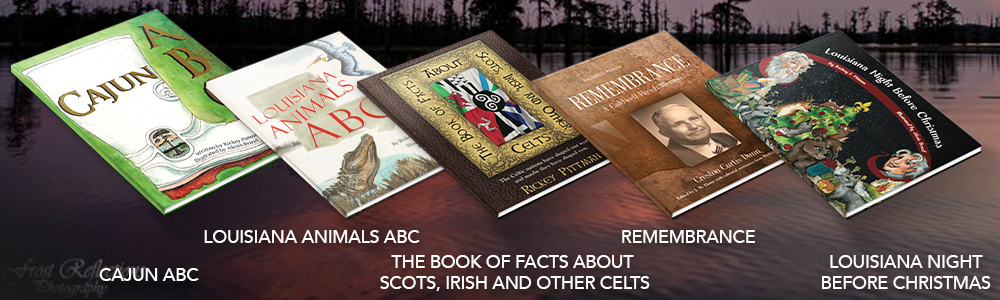
Few battles of the War Between the States  have captured the attention of people as much as the Battle of Gettysburg, PA.  This is an excerpt from one of my stories in my collection of short fiction entitled, Stories of the Confederate South. The soldier is in the 15th Alabama, and an Irishman from Connemara. You can read more about the book the story comes from by clicking on the book’s link/icon on this page.  The story was inspired by a song of Jed Marum.

A Prayer from Little Round Top

Jim leaned his back against an oak to catch his breath, and used its broad trunk as a shield while he reloaded. Bullets bored into the tree, chewing off chunks of bark and notching its edge until the side of the tree resembled a saw blade.  The torrent of lead dug into the ground about him, and the Minnie balls slashed branches and saplings and brush, and ricocheted or flattened against rocks. At least there’s a breeze, he thought, and he sucked a deep breath into his lungs. It’s Southern air, he thought. Blowin’ my way.
He watched his friend, Sean, scramble to the left of him in bare feet across the slick, moss-covered rocks, his Enfield slung across his back. The hillside was steep, so Sean’s hands clutched branches and bushes to steady his ascent. Even over the rifle shots and cannon, Jim heard Sean wretch after he too found a shield-tree.
He and Sean had woven their way to this point through the boulders and trees, past the dead, past their own wounded friends, relatives, and comrades who would be abandoned to the Federals’ mercy if the battle were lost.  Behind them, black-powder smoke crept along the ground like a malignant fogbank, veiling the blood staining the moss and leaf-covered ground and congealing in puddles on rocks. Giant boulders rose above the clumps of slain men like tombstones.
Like the other soldiers of the Fifteenth Alabama on this Pennsylvania hilltop, Jim coughed and gagged and choked on his swollen tongue. He licked his parched and split lips, wishing he had a canteen. Hours before, the captain had gathered all their empty canteens and sent a squad of men to fill them.  The squad had not returned, meaning that they had been caught in a firefight or had been captured. He and the other men of the Fifteenth had now gone six hours without water, and the heat had steadily increased. Many men had fallen out due to heat exhaustion. Having already taken heavy losses, Colonel Oates was now left with only 400 men and officers to make this crucial assault on the Federal flank.
Jim tore open a cartridge with his teeth, and the acrid taste of the powder only made his dry mouth pucker even more. He emptied the powder into the barrel, squeezed in the cartridge, and rammed it home.  Jim rolled down the hill to get closer to Sean, then called out, “Who are we facing, Sean?”
“The green uniforms are Vermonters.  I think the blue are Maine men.”
“Those Vermonters are crack shots.  They’ve got the eyes and patience of hunters.”
“Aye, that they do.”
“Where’s Sergeant O’Connor?” Jim asked.
“Ahead of us.”
“He’s a fierce man.”
“Aye, there’s no fiercer Irishman for sure.”
Jim studied the side of the mountain, littered with the scattered forms of his comrades in their Tuscaloosa gray uniforms. We’ve got the Yankees on the run, but many of us are going to die here, he thought.
“Well, you rested up enough to move closer?” Sean said.
“Aye, Sean.” Jim picked out a tree, about fifteen yards ahead. He blew out his breath, doubled over and ran to it.  A green uniform rose on the summit, and some lines from Sir Gawain floated through his consciousness. He raised his Enfield, steadied its barrel against the tree, and fired.  The green uniform tumbled backwards.  He fumbled inside his cartridge pouch for another bullet.
The firing intensified—Spencers, Sharps, Enfields, Springfields—and he heard bullets pass overhead in waves of muffled sound. A rebel yell echoed as the rapidly thinning ranks of the 15th rallied and neared the summit. He marked and started for another boulder a few yards in front of him. A lead fist burned its way into his chest and knocked him on his back. Damn good shots, those Vermont boys, he thought.
He closed his eyes. Ellen’s face materialized, and he wondered how she would take the news of his death, wondered if she would know, wondered who would win this battle. Ellen, I love you so much.  God Almighty, I do.  And, as he always did in moments of stress, he thought of his sister. He reached into his canvass haversack and his shaking fingers found Sarah’s small daguerreotype. He looked at his twin, and saw her as he liked to remember her, before the famine and the sickness, before they had locked her from his sight in the coffin.
Through his blurred eyes he could make out the blue-tinted outline of Big Round Top about 1,000 yards away. The mountain’s base was shrouded in smoke. A Federal in the signal corps stood on its bald, weathered cap and flagged some distant artillery, and heat waves refracted the man’s form and the blue haze of the sky.  He remembered contemplating the two Round Tops as they marched on the double for this attack.  The two rounded mountains seemed like stiff sentinels in the gently rolling hills of Pennsylvania, stone children spawned by ancient volcanoes in a forgotten turbulent age.

*     *     *

Celtic Heritage

This weekend was an important event for me personally as it was the first public signing of my new children’s book, The Scottish Alphabet. The book was received well and I had a grand time story-telling to the little ones and to adults as well. The weekend was important in other ways as this news release indicates.

SEPTEMBER 5-7, 2008 DECLARED CELTIC HERITAGE WEEKEND

(Jackson, MS) – Governor Haley Barbour issued a proclamation that the weekend of September 5-7, 2008 is declared “Celtic Heritage Weekend” to coincide with 17th annual CelticFest Mississippi, a weekend celebrating the music, dance, and culture of the seven Celtic nations of Ireland, Scotland, Wales, Cornwall, the Isle of Man, Brittany, and Gallicia.

The Proclamation notes that large numbers of Irish, Scottish, and Welsh immigrants settled in what is now Mississippi as early as the mid-1700’s, establishing homes, farms, and communities. These Celtic settlers made significant contributions in every aspect of life which are still felt today.

The Celtic Heritage Society (CHS) was founded in 1992 by Celtic music and dance practitioners. The mission of the CHS is to preserve, promote, and present traditional Celtic art and culture in Mississippi.

CelticFest Mississippi is the main outgrowth of the CHS mission, celebrating traditional Celtic culture over three days with stage performances, workshops, food, drink, and specialty item vendors. The event takes place at the Mississippi Agricultural and Forestry Museum.

Regardless of personal ethnic background, all Missisippians share a common culture influenced by those who settled the area. Some sources estimate that as much as three out of every four Southerners can claim Celtic ancestry.

For more information, please visit the CelticFest web site: www.CelticFestMS.org. The Celtic Heritage Society is a 501(c)3 nonprofit organization with the mission of promoting and preserving the arts and culture of the Celtic nations. CelticFest is a family-oriented event, and all CHS events are open to the public.

CelticFest’s sponsors include: Fenian’s Irish Pub, Guinness, Cabot Lodge Millsaps, Branch Cable, Wine & Spirits in the Quarter, the Jackson Irish Dancers. This project is also funded in part by a grant from the Mississippi Arts Commission, a state agency and by the Southern Arts Federation in partnership with the National Endowment for the Arts and the Mississippi Arts Commission.

Art Therapy: A Definition

This weekend at the Celtic Fest in Jackson,  was an extraordinary weekend.  I met so many fascinating and artistic people. One of the many interesting people I met was Dianne Stefanick, an intelligent and beautiful volunteer worker for the festival.  She is also an art therapist with a very impressive resume.  I’ve long believed in the healing, redemptive, and creative power of art, and talking to her helped solidify my beliefs about that. What follows is an article she gave me defining art therapy.

ART THERAPY DEFINED

Art Therapy is the therapeutic use of art making. within a professional relationship, by people who experience illness, trauma, or challenges in living, and by people who seek personal development.  Through creating art and reflecting on the art products and processes, people can increase awareness of self and others cope with symptoms, stress, and traumatic experiences; enhance cognitive abilities; and enjoy the life-affirming pleasure of making art

Art Therapists are professionals trained in both art and therapy.  They are knowledgeable about human development, psychological theories, clinical practices, spiritual, multicultural and artistic traditions, and the healing potential of art.  They use art in treatment, assessment, and research, and provide consultations to allied professionals.  Art therapist works with people of all ages: individuals, couples, families, groups and communities.   They provide services, individually and as a part of clinical teams, in settings that include mental health, rehabilitation, medical and forensic institutions: community outreach programs; wellness centers; schools; nursing homes; corporate structures; open studios and independent practices.

The American Art Therapy Association, Inc. (ATTA) sets educational, professional, and ethical standards for its members.  The Art Therapy Credentials Board, Inc. (ATCB), an independent organization, grants credentials.  Registration ( ATR) is granted upon completion of graduate education and post-graduate supervised experience.  Board Certification (ATR-BC) is granted to Registered Art Therapist who passes a written examination, and is maintained through continuing education.  Some states regulate the practice of art therapy and in many states art therapist can become licensed as counselors or mental health therapists.

Report from Celtic Fest Mississippi in Jackson 2008

This has been an overwhelming and wonderful experience, with little sleep. The Scottish Alphabet book is selling well. Tom and I have performed three times, and we have one more to go today. I did two story-telling music sessions, and have one to go. There will be many photos of this event. So many talented musicians and dancers, so many fascinating people. Here are three photos to get thoughts on this event started.

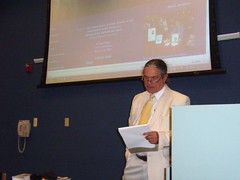
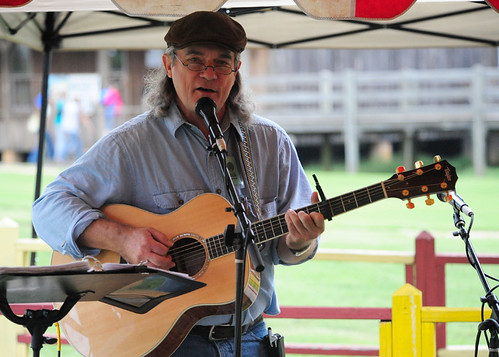
The first photo is of me last March, doing storytelling in Baton Rouge, LA. Though not connected with this present festival in Jackson, it is one of my doing storytelling on stage.

baton rouge08

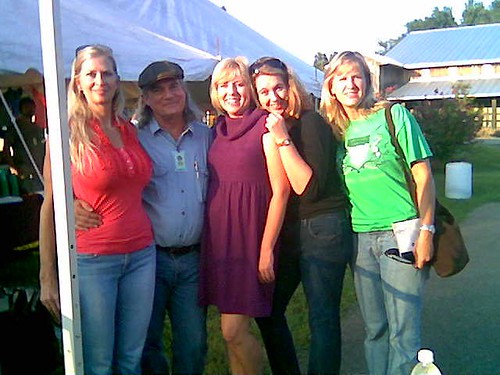
The second photo is of me with volunteer workers of the Northeast Louisiana Celtic Society.

NELA Celtic Fest Workers

The workers are Tina, Rhonda, Amanda, & Gloria. They worked so hard to promote the society and W. Monroe’s upcoming Celtic Festival.

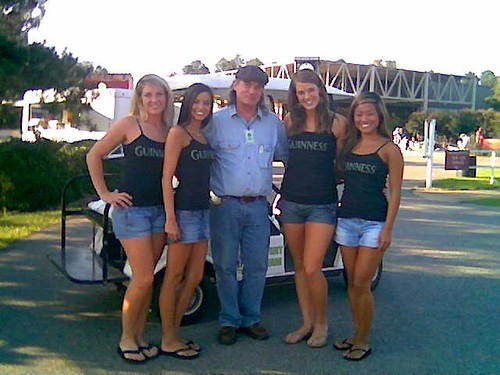
Guinness, along with Fenian’s Pub and Cabot Lodge (where I’m staying in Jackson), is one of the official hosts. Here are the Guinness Girls, whose task was to promote Guinness by photo ops.

guinness workers

Weekend Plans

This weekend I’ll be performing and storytelling at the Celtic Fest Mississippi in Jackson. My friend Tom and I (we call ourselves Angus Dubhghall) are performing 4 times, at 11 p.m. Friday, 10 a.m. and 10 p.m. Saturday; and at 11:30 a.m. on Sunday. I’m also scheduled to do storytelling and music 11:30 a.m.n and 4:00 p.m. Saturday, and 3:30 p.m. on Sunday. I’ll also be showing and signing my new Scottish Alphabet children’s book. I checked Ingram and orders for the book have been pouring in!  Needless to say, I’ll be very busy this weekend. You can find the site for this fabulous festival here.  I hope you explore the site. You can download a schedule, and you can view other festival participants. I’ll have my laptop with me (we’re supposed to be in the Cabot Lodge in downtown Jackson) so I’ll try to post some news and pics of the festival. I am looking forward to hearing and meeting some of these Celtic celebrities who will be performing!  There should be tons of Celtic crafts as well.

Puritan Laws & I Made the News!

At ULM I’m teaching ENG 205, American Literature till 1865. This is the first time I’ve taught the course,  and I’m both enjoying and learning more than I expected. One focal point in my studies (possibly perverse and indicative of serious personality and pathological problems) is my fascination with the Puritans. Maybe it’s my religious upbringing. Maybe it was the bad experiences I had as an adult with a certain religious group in New York City. Anyway, currently I’m attempting to help my students understand the mindset and world of the Puritans. For example, here are some notes on Puritan laws I’ll be presenting. If you teach Arthur Miller’s The Crucible in high school or college, you may want to use this list. The information was gleaned from a variety of sources.

Examples of Puritan Laws: (There are so many more, but these should give you insights into their thinking)

1. Beachcombing is illegal.
2.Hunting ducks is illegal. (If you’re a bad shot, they thought you would waste resources and time)
3. Drama/theatre, erotic poetry, and religious music, gambling, are banned. (Remember, these are the ones who closed down Shakespeare’s theatre.)
4. Any form of idleness or laziness. (Yawn . . . I’m sorry! I’m sorry!)
5. Swearing, sleeping during sermons, skipping church will be punished.
6. Long hair will not be tolerated. (Must be why the Cavalier Poets fought with Charles I. I would NOT like the Roundhead Puritan haircut! You can see a painting of a Roundhead here:
7. Gluttony is forbidden.
8. Religious instruction is required for all, as well as public fasting, austere living, and evening curfew. (According to one town’s records, a man was imprisoned for three days for smiling during a baptism.)
Entertainments, theaters, festivals, were banned and the Puritans prescribed the death penalty for sex outside of marriage. Lord Macaulay said the Puritans “hated bear-baiting, not because it gave pain to the bear, but because it gave pleasure to the spectators.” The Puritans also opposed dancing, drinking, card playing, gambling, listening to certain types of music, reading novels or poetry, rolling dice, going to horse races, wearing jewelry and makeup, or having thoughts relating to sexual pleasure.
9.The celebration of Christmas was even forbidden in Massachusetts on pain of a five-shilling fine. In England, the Puritan Parliament “prohibited the observance of Christmas, Easter, Whitsunday, saints’ days and holy days.”
8. All work, play, brewing, and travel were forbidden on Sunday (which they called the Sabbath). There was even a debate on whether a man could be rescued from a well on that day. Folks were punished for picking strawberries, playing cards, smoking, and sailing. In 1670, a couple was brought to trial for “sitting together on the Lord’s Day under an apple tree.” Sex on Sunday was out of the question. This was particularly a problem for children born on Sunday, because Puritans believed that people were born on the same day on which they were conceived. Sunday-born children were sometimes denied baptism for this reason. A minister name Israel Loring was very strict in this regard until his own wife gave birth to twins on a Sunday.

Punishments for violating Puritan laws included fines, imprisonment, pillory, stocks, whipping, hanging, tar and feathering, ears being cut off, occasionally burning, and once in America, a man was drawn and quartered, ducking stool (reserved for women who gossip or ridicule their husbands) and humiliation (wearing letters indicating your crime etc.,) and even a hot awl through your tongue if you spoke against religion.

A Small Rant Against Puritanism

Existing Sunday Blue Laws are a hangover from those Puritan days. So is our government’s and society’s compulsion to create laws AGAINST everything. The mountain of laws we create in our effort to legislate morality is a control and power issue as well as a tax/fund-raising strategy. The ideas we promote of inflicting humiliation and increasingly more severe punishments are straight out of this dark Puritan mindset. Such thinking is just an excuse to  justify cruelty against our fellow human beings. While we may not want a theocracy like the Puritans did, the Big Brother-ocracy of Big Government many want is just as bad a replacement. (Please read Orwell’s novel, 1984 if you haven’t.) Such a mindset was repulsive and ineffective then, and it will be today as well.

I Made the News!

Well, I somehow made the news again. Read about it here:

Gustav and Daily Harvest Performance

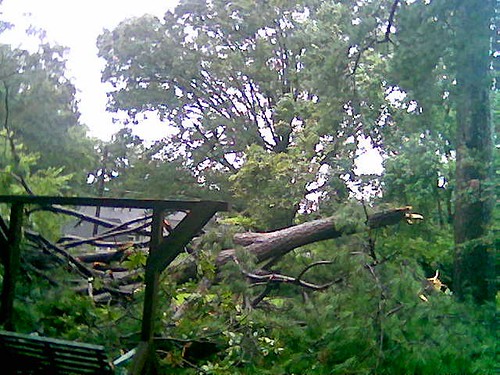
The rain-bands that circled through Monroe from Gustav pounded us with inches of rain and gusts of wind. Monroe is packed with refugees, and every hotel is filled to capacity. The shelters are too. Though I was fortunate because I didn’t lose power, last night Gustav left me a personal calling card. A gust of wind snapped a huge pine tree in half in my backyard. I’m so lucky that it didn’t hit the house. It did take out my phone line. It will be a major expense of time and money to get my yard cleaned up. Here is a photo, though the fallen pine tree covered so much of my backyard that I couldn’t get it all in the photo. How sad to think this ancient pine that has survived nearly 100 years and was healthy had to perish like this.

gustavpinetree08

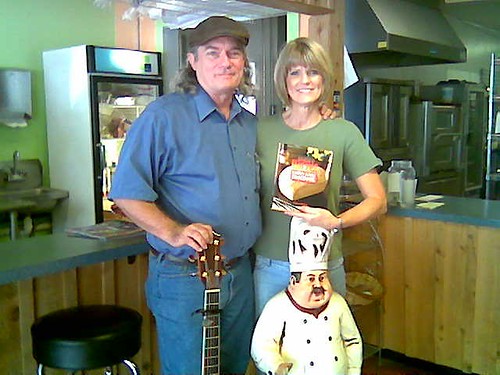
Here is a photo of me and Teresa Gordan, the owner of Daily Harvest Bakery & Deli in Monroe. This was taken last Saturday. Standing with us is Teresa’s Little Baker Man (made of wood). Last week I saw a little boy give the Little Baker Man a kiss. That was a Kodac moment I’m sorry I missed. I so enjoy performing at Daily Harvest. Teresa’s cookbook is out and it is beautiful! I’ll be performing again September 13. If you’re in the area, please come. Again, I’ll be there from about 9:00 a.m. to 1:00-2:00 p.m.

daily harvest o8

How to Prepare a MLA Manuscript for High School and College Students

Steps to Prepare a Manuscript for MLA Style

Introduction: It is vital that high school and college English students know how to present their manuscript in MLA (Modern Language Association) style. In my classes, penalties are high for failing to follow MLA manuscript guidelines. There are many sites that give specifics (do a search on MLA style and bibliography), but when I have computers available, here are the steps I have my students follow. I begin with a statement: “Don’t do anything till I tell you. Then follow directions.” Good students know to follow instructions immediately, the first time they are given. I use the preset Microsoft Word margins. The students are creating a template by this exercise that they can copy for each paper. So, once they follow these steps, they never have to recreate the correct form again. I realize that the newest version of Word (which I don’t have yet) will follow different guidelines I will post those too when I get it. This is Word 2004 for MAC, which is good for 1993-2003 Word versions. Teachers may use these notes freely if you credit this site.

Creating Your MLA Manuscript Template

1. Go to VIEW, select PAGE VIEW or PRINT VIEW.

2. Go to VIEW, select HEADER AND FOOTER. You’ll see a cursor flashing in the bar on the left. Hit tab twice. The cursor will go to the far right. Type in your last name, hit the space bar once, and click on the number icon (#) on the far left. Your pages will automatically number themselves now.

3. Go to FORMAT. Pull down to PARAGRAPH. Click on to LINE SPACING. Select DOUBLE SPACE. Click on OKAY. Everything in MLA is double-spaced. Setting it up to do it now will save you grief and unwanted spaces later.

4. Now you create your HEADER. Type in First and last name. Hit return. Type in your course. Hit return. Type in your instructor’s name, return, and then the date. Note that many instructors have slight variations in guidelines for the header. For example, in some classes, I ask students to list the assignment. Hit return ONCE.

5. Click on the center icon on the ribbon, or go to paragraph, click on ALIGNMENT and select CENTER. Type in your title. Hit return. click on LEFT justification icon, or go to PARAGRAPh, click on ALIGNMENT and select LEFT.

6. Hit TAB once. Type in these words:

This is my introduction paragraph, and this first sentence is my HOOK sentence, designed to capture the reader’s attention. The second sentence is my THESIS, and this sentence clearly states my argument, and it is best to have three clear points in my because a thesis sentence is like the three points of a sermon, it is a blueprint to help me organize my paper, and it reveals the logic of my argument.

Now, hit RETURN, then TAB. Type the following words:

This is my first body paragraph. This will concern the first point stated in my thesis sentence. The whole paragraph will have at least five sentences. The second-fourth sentences are written to illustrate or prove my first point. The other body sentences under this can be examples, sub-points, or questions that illustrate or prove my points. The final sentence is a conclusion sentence that nails down my point.

Now, hit TAB and type this:

This is my second body paragraph. This will concern the second point of my argument (my thesis). The first sentence can/should have some sort of transitional thought that connects my reasoning to the first point of my thesis. This paragraph will also have at least five sentences. The final sentence will be a concluding sentence.

Now, hit TAB and type this:

This is my third body paragraph. This will concern the third point of my thesis. The first sentence will have some sort of transition to connect the argument to the thesis and earlier paragraphs. This paragraph will also have at least five sentences. One of them will of course be the concluding sentence.

Now, hit TAB, and type this:

This paragraph must be at least two-three sentences. This sums up the arguments, nails down the main idea of the thesis, and unlike journalism, which often places the strongest points first, here I want my strongest point and language. While the concluding paragraph can rephrase the thesis, it should not just be a repetition of it.

7. Now, go to INSERT and select PAGE BREAK. Select the CENTER icon or go to PARAGRAPH, select ALIGNMENT and select CENTER. Type in your title. For now, just type in the words WORKS CITED.

8. Now, select LEFT justification icon or go to PARAGRAPH, select ALIGNMENT, and select LEFT. Here is where you will list the books, magazines, journals, newspapers, and online sources used in your paper. The first line of an entry is not indented, but all following lines for that entry are. It is best to enter the source immediately as you use it. This will save you valuable time. A WORKS CITED page is in alphabetical order by last name of author.

A Program for School Librarians & Cultural Enrichment for Students

Hurricane Gustav:

Well, once again, nature has turned harsh and ugly. So much for Transcendentalism. My publisher (Pelican Publishing) and many of my friends are along the coast. I hope the storm fizzles out. Seeing Cameron Parish this summer depressed me–even so long after Rita. Michele, my good friend and now staff writer for the Assumption Parish newspaper, should have much to write about after the storm is over.

CelticFest Mississippi in Jackson, Sept. 5-6

Assuming Gustav doesn’t do too much damage and disrupt our life too much, my good friend Tom McCandlish and I will be performing at this festival. We have 4 sets. We call ourselves Angus Dubhghall, naming ourselves after two famous Scot warrior-chieftains. I am also booked for two storytelling sessions for the kiddies. I’ll be selling and signing my Scottish Alphabet books as well. If you like Celtic crafts, music, and culture, you will love this festival. You can read all about this festival and see the other performers here:

Here is my flyer (flier is less correct alternate spelling) I use for my Scottish-Irish (Scots-Irish) school programs. Feel free to copy it and send it to librarians or teachers who may be interested in booking me. I love to travel, so I’ll go anywhere. Since my children’s picture book, The Scottish Alphabet, came out, this program is popular now, as well as my Civil War and Texas History program.

scots-irish flyer

A True Slave Narrative: Ida Atkins 72 Years Old

Here is one of the famous slave narratives that help us understand what life was like for black Americans before, during and after the Civil War. Most libraries have sets of these. If you purchase a set for yourself, make sure you get the complete set as the abridged set has been severely edited and you’ll get a less objective and jaundiced view of the topic of slavery. The account I have below, for example, is one that might be left out of the purged shorter set (that follows an agenda).

According to this site: “From 1936 to 1938, over 2,300 former slaves from across the American South were interviewed by writers and journalists under the aegis of the Works Progress Administration. These former slaves, most born in the last years of the slave regime or during the Civil War, provided first-hand accounts of their experiences on plantations, in cities, and on small farms. Their narratives remain a peerless resource for understanding the lives of America’s four million slaves. What makes the WPA narratives so rich is that they capture the very voices of American slavery, revealing the texture of life as it was experienced and remembered. Each narrative taken alone offers a fragmentary, microcosmic representation of slave life. Read together, they offer a sweeping composite view of slavery in North America, allowing us to explore some of the most compelling themes of nineteenth-century slavery, including labor, resistance and flight, family life, relations with masters, and religious belief.”  Here is the article I selected. In the transcription some of the original dialect may have been cleaned up to ease reading.

Ida Adkins : 72 years old

I was born before the war.  I was about 8 years old when the Yankee soldiers came through.  My mother and father were Hattie and Jim Jeffries and they belonged to Marse Frank Jeffries.  Marse Frank come from Mississippi, but when I was born he and Miss Mary Jane were living down here near Louisburg in North Carolina where they had a big plantation with I-don’t-know how many slaves.  Marse Frank was very good to his slaves – maybe excepting that they never got enough to eat.  He worked ‘em hard on half rations but he didn’t believe in all the time beating or selling his slaves.

My father worked at the stables, he was a good horseman, but my mother worked at the  big house helping Miss Mary Jane.  Mother worked in the weaving room.  I can see her now sitting a the weaving machine and hear the pedals going “plop, plop”, as she treaded them with her feet.  She was a good weaver.  I stayed around the big house too, picking up chips, sweeping the yard and such as that.  Miss Mary Jane was quick as a whip-po-will.  He had black eyes that snapped, an they saw everything.  She could turn her head so quick that she’d catch you every time if you tried to steal a lump of sugar.  I liked Marse Frank better than I did Miss Mary Jane.  All of us little children called him “Big Pappy”.  He’d go to Raleigh about twice a year and every time he would come back he brought all of us children some candy.  Raleigh was a far ways from the plantation – near about sixty miles.  It always took Marse Frank about three days to make the trip.  A day to go, a day to stay in town, and a day to come back.  He would always get back at night unless he rode the horse back instead of the carriage – and then he would get back about sun-down.

Marse Frank did not go to the war, he was too old.  So when the Yankees come through they found him at home.  When Marse Frank saw the Yankees coming down the road, he ran and got his gun.  The Yankees were on horses.  I ain’t never seen so many men.  They was thick as hornets coming down the road in a cloud of dust.  They come up  to the house and tied the horses to the pailin’s of the fence. There were so many they were all around the yard.  When they saw Marse Frank standing on the porch with a gun leveled on them they got mad.  Marse Frank shot one time and a big bully Yankee snatched the gun away and told Marse Frank to hold his hands behind his back.  Then they tied his hands and pushed him down on the floor beside the house and told him that if he moved a inch they would shoot him.  Then they went into the house.

I was scared near about to death, but I ran into the kitchen and got a butcher knife, and when the Yankees were not looking, I tried to cut the rope and set Marse Frank free.  But one of them blue devils saw me an come a running. He said: “What you doin’ you black brat – you stinking little alligator bait!”  He snatched the knife from my hand and told me to
stick out my tongue, that he was gonna cut it off.  I let out a yell and run behind the house.

Some of the Yankees was in the smoke house getting (stealing) the meat, some of them was at the stabled getting(stealing)  the horses, an some of them was in the house getting(stealing)  the silver and things.. I saw them put the big silver pitcher and tea pot in a bag.  Then they took the knives and forks and all the candle sticks and platters off the side board and they went in the parlor and got the gold clock that was Miss Mary Jane’s grand mothers’ clock.  Then they got all the jewelry out of Miss Mary Jane’s box.  And they even went up to Miss Mary Jane and while she looked at them with those black eyes snapping, they took the rings off her fingers, and the gold bracelet off her hand, they even took the ruby ear rings off of her ears and the gold comb out of her hair.

By that time I was done peeping in the window and was standing beside the house when the Yankees come out in the yard with all the stuff they was toting off.  Mares Frank was still on the porch floor with his hands tied and couldn’t do nothing.  About that time I saw all those bee gums in the side yard.   They was a whole line of the gums.  Little as I was I had a notion.  I run and got me a long stick and turned over every one of them gums.  Then I stirred them bees up with the stick till they was so mad I could smell the poison.  An bees!! You ain’t never seen the like of it  – bees everywhere!! They was swarming all over the place.  The sailed into them Yankees like bullets — each one madder then the other. They lit on the Yankees’ horses till the horses looked like they were alive with the varmints.  The horses broke they bridles and tore down the pailings and lit out down the road.  That running wasn’t nothing — to what the Yankees done.  They bust out cussing — but what did a bee care about cuss words! They lit on them blue coats and every time they lit the stuck in a poison sting.  The Yankees forgot all about the meat and things they done stole; they took off down the road on a run, passing the horses.  The bees were right after them in a long line.  They’d zoom and zip and zoom and zip and every time they zip a Yankee would yell.

When they were all gone, Miss Mary Jane untied Marse Frank and then they took all the silver and meat and things the Yankees left behind and buried and hid it so if they came back they couldn’t find it.  Then they called me and said:

Ida Lee, if you hadn’t turned over the bee gums the Yankees would have toted off near about everything fine that we have.  We want to give you something you can keep so you’ll always remember this day and how you ran the Yankees away.  Then Miss Mary Jane took a plain gold ring off her finger and put it on mine.  And I’ve been wearing that ring ever since.